Different Cooking Methods Explained: A Complete Guide for Beginners
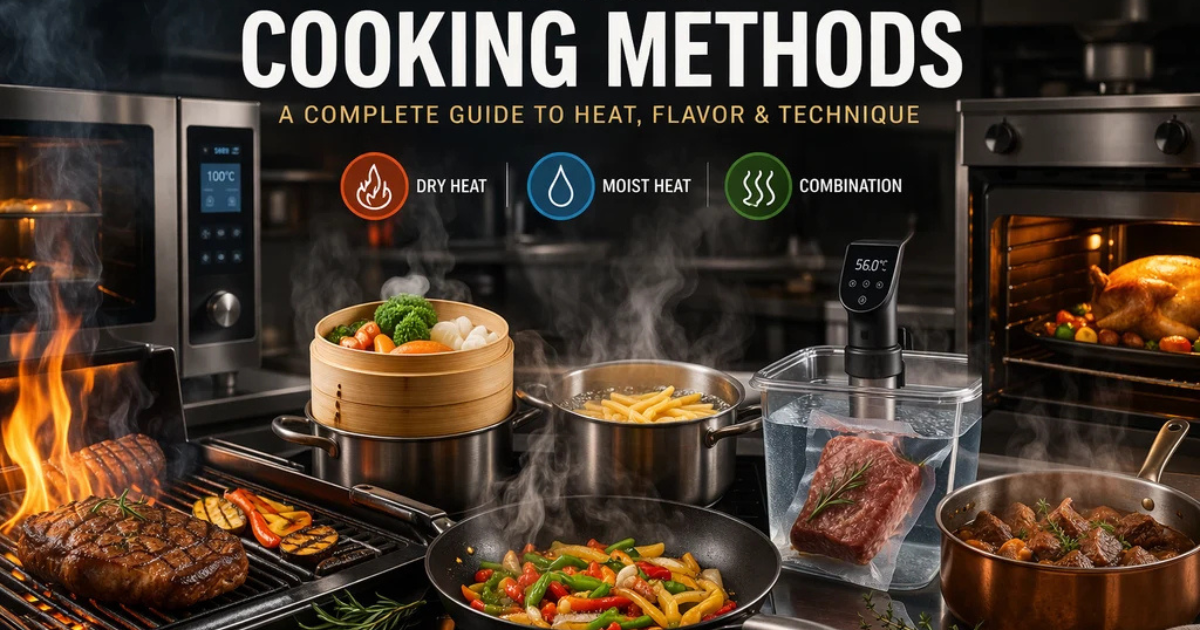
Cooking is an essential part of everyday life, and understanding different cooking methods can help you prepare delicious, healthy, and flavorful meals. Every cooking method has its own benefits, techniques, and results. Some methods make food crispy, while others keep it soft, juicy, and tender. Whether you are a beginner or an experienced home cook, learning about different cooking methods can improve your kitchen skills.
In this article, we will explore some of the most popular cooking methods and explain how they work.
1. Boiling
Boiling is one of the simplest and most common cooking methods. It involves cooking food in water or another liquid at a high temperature until it reaches its boiling point.
This method is commonly used for preparing rice, pasta, potatoes, eggs, and vegetables. Boiling is easy because it requires minimal equipment and cooking skills.
However, boiling vegetables for too long may cause some nutrients to move into the cooking water. To maintain their nutritional value, avoid overcooking them.
2. Steaming
Steaming is a healthy cooking method that uses hot steam to cook food. Instead of placing food directly into water, ingredients are placed in a steamer above boiling water.
This method is excellent for vegetables, fish, chicken, and dumplings. Steaming helps preserve the natural color, texture, and flavor of many ingredients.
It also requires little or no added oil, making it a useful option for people who want to prepare lighter meals.
3. Frying
Frying involves cooking food in hot oil or fat. It is popular because it gives food a crispy texture and rich flavor.
There are two main types of frying:
- Deep Frying: Food is completely covered in hot oil. It is commonly used for French fries, fried chicken, and snacks.
- Shallow Frying: Food is cooked in a smaller amount of oil in a frying pan. It is often used for eggs, fish, and vegetables.
Although frying can make food delicious, eating too much deep-fried food may increase your intake of unhealthy fats and calories.
4. Baking
Baking is a cooking method that uses dry heat inside an oven. It is commonly used for cakes, cookies, bread, pastries, and certain savory dishes.
The heat circulates around the food, allowing it to cook evenly. Baking usually requires accurate temperature settings and cooking times.
One major advantage of baking is that it often requires less oil than frying. It is also a convenient method for preparing large portions of food.
5. Grilling
Grilling involves cooking food using direct heat from below or above. It is commonly used for meat, fish, chicken, and vegetables.
Grilling gives food a smoky flavor and attractive marks. It is popular for outdoor cooking, barbecues, and family gatherings.
This method can reduce the need for extra cooking oil. However, avoid burning food because heavily charred foods may contain harmful compounds.
6. Roasting
Roasting is another dry-heat cooking method that usually involves cooking food in an oven. It is especially popular for whole chickens, meat, potatoes, and vegetables.
Roasting creates a golden-brown exterior while keeping the inside tender when prepared correctly.
Adding herbs, spices, and a small amount of oil can improve the flavor of roasted foods.
7. Sautéing
Sautéing is a quick cooking method that involves cooking small pieces of food in a pan with a little oil or butter over medium or high heat.
It is commonly used for onions, garlic, vegetables, chicken, and seafood.
The main advantage of sautéing is that food cooks quickly while maintaining much of its natural texture and flavor. Constant stirring or tossing helps prevent burning.
8. Slow Cooking
Slow cooking involves preparing food at a low temperature over several hours. It is commonly used for soups, stews, beans, and tough cuts of meat.
This method allows flavors to develop gradually and can make tougher ingredients tender.
Slow cooking is convenient for busy people because ingredients can be prepared in advance and left to cook according to the appliance instructions.
Conclusion
Understanding different cooking methods can make everyday meal preparation easier and more enjoyable. Boiling and steaming are simple options, while frying and grilling create stronger flavors and different textures. Baking and roasting are excellent for oven-based meals, whereas sautéing and slow cooking offer convenience and versatility.
Choosing the right cooking method depends on the type of food, your personal preferences, and your nutritional goals. By experimenting with these techniques, you can improve your cooking skills and prepare a wider variety of delicious meals at home.